
Service
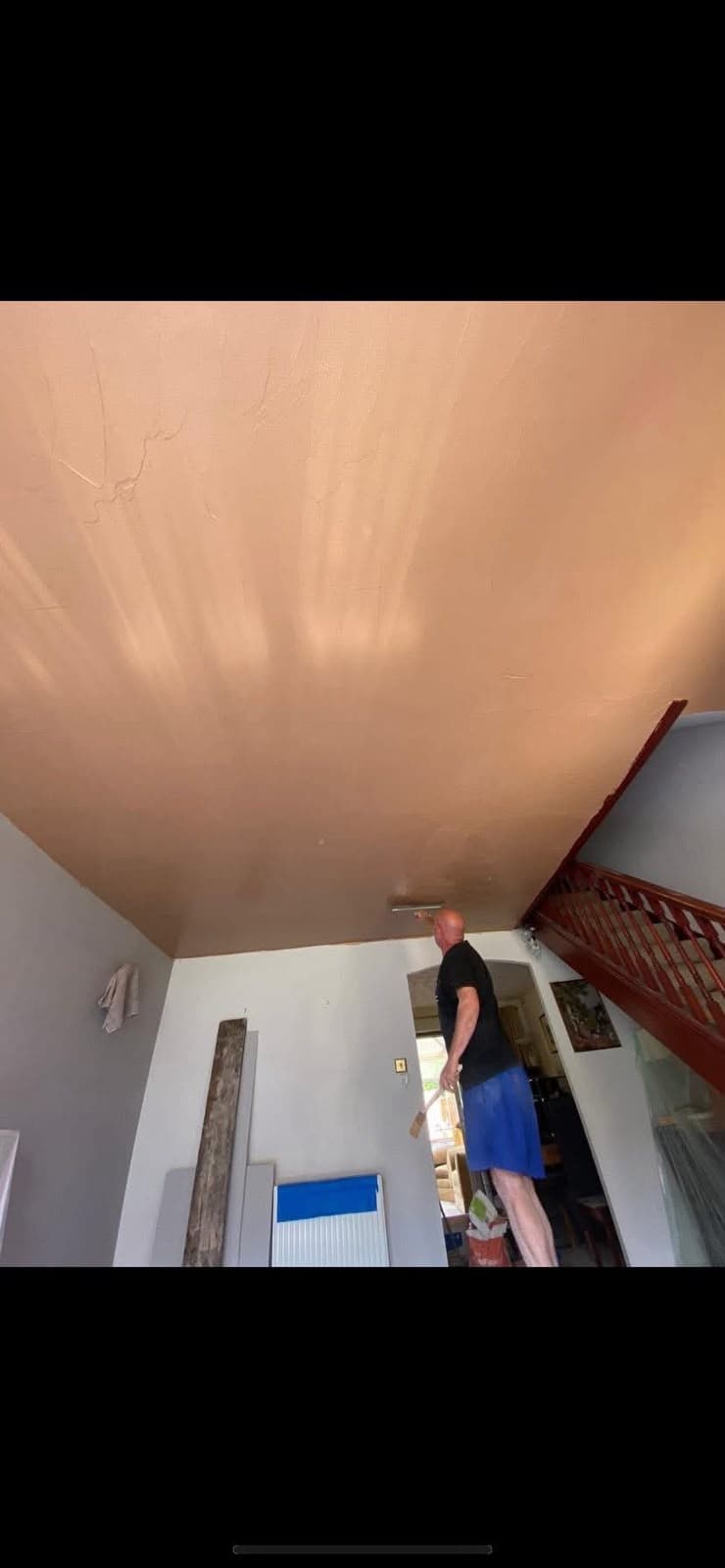
Finishing the job you started: new plaster misted, cut in and topped out so one tradesman sees it through.
10/10
From 69 Checkatrade reviews
Free
Quotes, with no call-out charge
2020
Checkatrade member since
Local
Rossendale based, Lancashire wide
The most common frustration after a plastering job is the wait. The walls are beautiful, the room is unusable until it is painted, and the decorator cannot fit you in for three weeks. Offering the painting as well closes that gap: the plaster goes on, it dries, and the same person comes back and finishes it, so the room comes back into use on a schedule you were told about at the start.
New plaster also has its own rules, and they are where most self-decorated rooms go wrong. Fresh plaster is extremely porous, and a full-strength emulsion straight onto it sits on the surface, dries patchy, and peels at the edges within a year. It needs a mist coat first, emulsion thinned with water, worked in so the wall drinks it evenly. Then the top coats go on and behave themselves. Anyone who has painted new plaster the wrong way once never forgets it.
The rest is ordinary careful decorating: filling and caulking the small movement at junctions, cutting in cleanly at ceilings, coving and skirtings, and sheeting and masking properly so nothing needs touching up afterwards. There is nothing clever about it, but there is a real difference between edges cut in by someone with a steady hand and edges done in a hurry.
Being straight about scope: this is finishing work that follows a plastering job, not a full decorating firm. Wallpapering, specialist finishes, spraying and large commercial decorating contracts are not what Lee does, and you will get pointed at somebody who does rather than getting a stretched yes.
What is included
- New plaster misted correctly before its top coats
- Walls and ceilings finished so the room comes back into use sooner
- Junctions caulked and filled before painting rather than after
- Clean cut-ins at ceilings, coving and skirtings
- Everything masked and sheeted, no touching up afterwards
- One tradesman from bare wall to finished room
What it costs
Usually quoted alongside the plastering as one figure, which is cheaper than booking it separately because the set-up and access are already there.
How long it takes
A single room is typically a day to a day and a half once the plaster is fully dry.
Get a free quoteIn your town
Painting Across East Lancashire
Every town below has its own painting and decorating page, with the local building stock, the prices and the questions that come up in that town specifically.
Common questions
Painting and Decorating Questions
Why does new plaster need a mist coat?
Fresh plaster is very porous and pulls the moisture out of full-strength emulsion before it can bond. The result is patchy coverage that peels at the edges. A mist coat, emulsion thinned with water, soaks in and gives the top coats something to key to. It is the single most important step and the one most often skipped.
How long after plastering can you paint?
Four to seven days for a normal room, longer if it is cold or the heating is off. The plaster turns from dark pink to a consistent pale shade when it is ready. Painting a wall that still has dark patches traps moisture behind the paint.
Do you do wallpapering?
No. This is painting that finishes off a plastering job, not full decorating. Papering, specialist finishes and spraying are somebody else's trade and you will get pointed towards someone who does them properly rather than being sold a stretched yes.
Can you paint if someone else did the plastering?
Usually yes, though Lee will want to look at the surface first. If the plaster was finished poorly, painting it only makes the flaws more obvious under a fresh coat, and it is better to know that before the tins are open than after.
Do you supply the paint?
Either way works. Plenty of people want a specific colour and brand and buy it themselves. If you would rather leave it, Lee will supply it and the cost goes on the quote at what it cost.
How many coats do you put on new plaster?
A mist coat plus two full top coats is the standard, and on strong colours over fresh plaster it can want a third. Two coats without a mist coat is not a shortcut, it is the thing that fails.
Do you paint ceilings as well as walls?
Yes, and doing both together is the sensible order. Ceilings first, then walls, then woodwork, so any overspill from each stage is covered by the next one rather than needing cutting in twice.
Will you paint the woodwork and skirtings?
Skirtings, architraves and doors can be included where it makes sense as part of finishing the room. It is worth saying at quote stage so the time is priced in rather than added on later.
Is it cheaper to have you paint than to book a decorator?
Usually, when it is quoted with the plastering, because the set-up, sheeting and access are already in place and there is no second mobilisation. As a standalone painting job with no plastering attached it will not be, and Lee will tell you that.
Can I paint it myself after you have plastered?
Absolutely, and plenty of people do. Ask Lee about the mist coat before you start and he will tell you the ratio and what to watch for. He would far rather spend two minutes explaining it than come back to a wall that has been painted wrong.
Other services
Need Painting Doing?
Tell Lee what needs doing and you will get an honest figure back, usually the same day. Free, no obligation, and no call-out charge.