
Checkatrade verified skill
Plasterboarding walls and ceilings, tape and jointing, and flattening out tired or textured ceilings.
10/10
From 69 Checkatrade reviews
Free
Quotes, with no call-out charge
2020
Checkatrade member since
Local
Rossendale based, Lancashire wide
Dry lining is the answer whenever the background is the problem rather than the finish. A solid stone wall that feels cold and never quite dries out, a ceiling that has textured coating over lath and plaster and has started to sag, or a partition that needs building from scratch. Boarding gives you a new, true surface to work to without having to fight whatever is behind it.
There are two ways to finish it and they are not interchangeable. Tape and jointing means filling and taping the board joints and sanding them flush, which suits large areas, commercial spaces and anywhere getting a heavy paper or a textured paint. A skim finish means two coats of plaster across the whole board, which gives a harder, more uniform surface and is what most homeowners want in a living room or bedroom. Lee does both and will tell you which suits the room and the budget rather than defaulting to whichever is quicker.
Flat ceilings are the most requested version of this in East Lancashire, and it is not hard to see why. A great deal of the housing stock here has original lath and plaster overhead with artex applied on top at some point in the seventies or eighties. Overboarding beneath it and skimming the new board gives a genuinely flat modern ceiling, hides the old surface completely, and avoids the mess and the risk of pulling down a lath ceiling that may not want to come quietly.
Insulated board is worth asking about on external walls. On a solid stone terrace with no cavity, an insulated plasterboard makes a noticeable difference to how quickly a room warms up and how it feels to sit in, and it goes on in the same operation as the lining. It costs more per sheet and it eats a little floor area, so it is a decision worth making deliberately rather than by default.
What is included
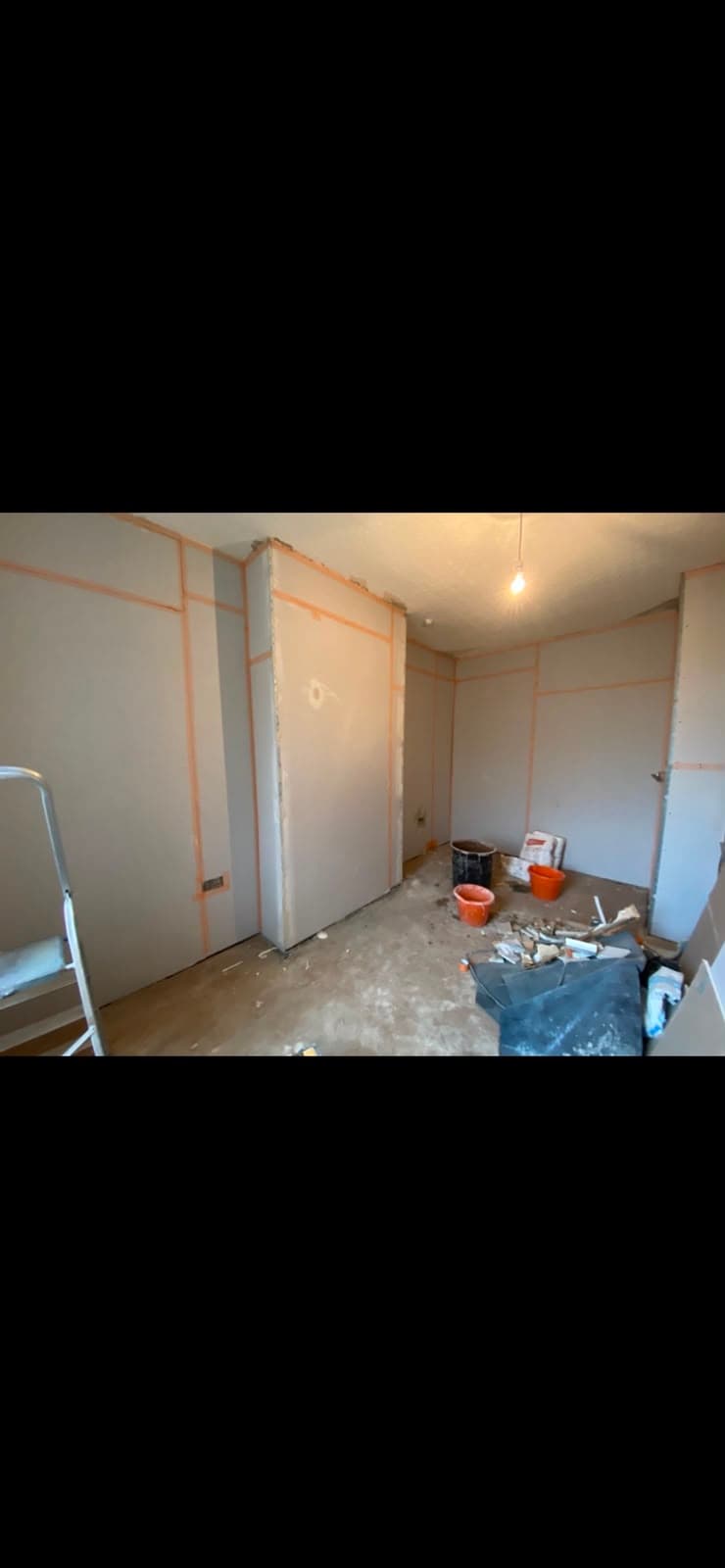
- Walls and ceilings boarded on dabs or on timber and metal framing
- Tape and jointing, a Checkatrade-verified skill on Lee's profile
- Flat ceilings installed over tired artex and lath and plaster
- Insulated plasterboard on cold solid walls where it is worth it
- New stud partitions boarded and finished ready to decorate
- Skim finish or taped finish, whichever suits the room
What it costs
Priced by area plus the board specification, since insulated and moisture-resistant boards cost noticeably more than standard. The finish you choose, taped or skimmed, also moves the figure.
How long it takes
A single ceiling overboard and skim is usually one to two days including the finish.
Get a free quoteIn your town
Dry Lining Across East Lancashire
Every town below has its own dry lining and flat ceilings page, with the local building stock, the prices and the questions that come up in that town specifically.
Common questions
Dry Lining and Flat Ceilings Questions
What is the difference between dry lining and plastering?
Dry lining fixes plasterboard to the wall or ceiling to create a new flat surface. Plastering applies wet material directly to the existing background. Dry lining is faster, adds far less moisture to the building, and is the better answer whenever the background behind is uneven, cold or unreliable.
Is tape and jointing as good as a skim finish?
For large areas, commercial work and anything getting a textured covering, taping is perfectly good and costs less. For a living room or bedroom that is getting a modern matt emulsion, a skim gives a harder and more uniform surface. Lee does both and will say which one the room actually wants.
Should I overboard my artex ceiling or skim it?
If the artex is thin and firmly attached, skimming over it works well and costs less. If it is thick, cracked, or the ceiling above is old lath and plaster that has started to move, overboarding is the sound answer. Lee will tap it and tell you which one you are dealing with.
Will dry lining make my room warmer?
Standard board makes very little difference. Insulated plasterboard genuinely does, and on a solid stone wall with no cavity, which describes a great many houses around Rossendale and Burnley, it is a noticeable change in how quickly the room heats and how it feels to sit against that wall.
How much room do I lose to dry lining?
Boarding on dabs takes around 25 to 35mm off the wall. Insulated board takes more, anywhere from 50mm upwards depending on the specification. On a small room that is worth thinking about before committing, and Lee will point it out rather than let you find out afterwards.
Can you board over an existing lath and plaster ceiling?
Usually yes, and it is often the better option. Fixings go through into the joists rather than relying on the old ceiling to hold anything. It avoids the considerable mess of pulling a lath ceiling down and it leaves the original in place above.
Do you build stud partitions as well as board them?
Yes, timber and metal stud both. Framing, boarding and finishing in one job means one trade and one point of responsibility rather than coordinating a joiner and a plasterer around each other.
What board do you use in a bathroom or kitchen?
Moisture-resistant board in wet areas as standard, and tile backer board where heavy tiling is going on it. Standard plasterboard in a shower room is a false economy that shows up as a soft, failing wall a couple of years later.
How long does a ceiling overboard take?
A typical room ceiling is a one to two day job including the finish coat, then normal drying time before decorating. Bigger rooms and anywhere with awkward access take longer, and Lee will tell you which yours is when he quotes.
Is dry lining messy?
Less than wet plastering onto an old background, and considerably less than hacking off. There is dust from cutting board and sanding joints, but there is no removal of old failed plaster, which is where most of the mess and the debris on a traditional job comes from.
Other services
Need Dry Lining Doing?
Tell Lee what needs doing and you will get an honest figure back, usually the same day. Free, no obligation, and no call-out charge.